
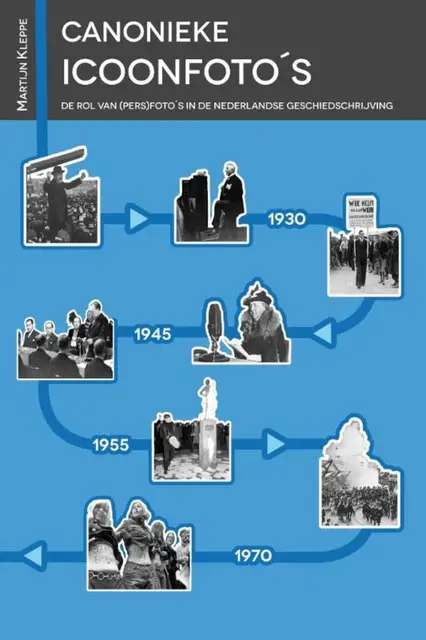
Canonieke icoonfoto's / de rol van (pers)foto's in de Nederlandse geschiedschrijving
Kleppe, Martijn
€ 9.95
In stock (only 1 copy left). Shipping € 4.55 (in the Netherlands; for other rates see Terms and shipping).
Sadly, this book has been sold.
- Author
- Kleppe, Martijn
- Publisher
- Eburon
- ISBN
- 9789059727229
- Language
- Dutch
- Condition notes
- 2013, 264pp, paperback, in mint condition
- Category
- Textbooks › Journalism
About this book
The Vietnamese girl fleeing the napalm bombs, or the Chinese man stopping a tank on Tiananmen Square – almost everyone is familiar with these images. Because these photographs represent more than what is literally depicted, they are iconic images that are published time and time again. ‘Canonical Iconic Photographs’ describes research into which Dutch photographs function as iconic images in school history textbooks and how these photographs come to acquire that status. Compilers of history textbooks cite practical reasons for choosing the same photographs, such as recognisability, which is said to boost sales figures. Furthermore, editors have little time to search for visual material. Consequently, they initially rely on their memory, with the result that the same photographs often recur in teaching materials. Two iconic photographs are analysed in detail: that of Pieter Jelles Troelstra addressing a crowd, and the famous ‘in charge of her own life’ photograph of Dolle Mina. These photographs increasingly function as symbols, whilst the dates often do not match. It frequently turns out that the photographs depict a different event to that suggested by the text. This book therefore argues for greater attention to be paid to the role of visual material in Dutch historiography. Martijn Kleppe works at Erasmus University Rotterdam and conducts research into the representation of history and daily news. He focuses primarily on the process of searching for visual material in archives and databases. Through Twitter, blog posts and articles in magazines and newspapers, he brings the results of his research to the attention of a wide audience.