
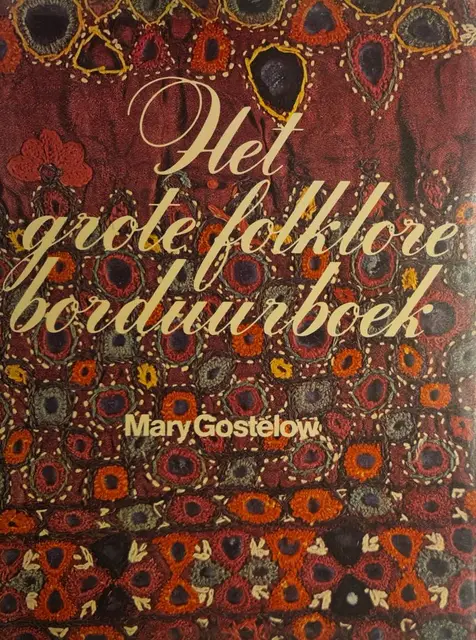
Elseviers folklore borduurboek
Gostelow, Mary
€ 7.95
In stock (only 1 copy left). Shipping € 6.95 (in the Netherlands; for other rates see Terms and shipping).
Sadly, this book has been sold.
- Author
- Gostelow, Mary
- Publisher
- Elesevier
- ISBN
- 9789010019769
- Language
- Dutch
- Condition notes
- 1978, 287 pp, hardback, dust jacket, used
- Category
- Hobby › Crafts
About this book
From the age-old tradition of embellishing fabrics with embroidery, we draw not only a wealth of information about design, traditional dress and many aspects of social history, but also inspiration. This book explores the history, design and embroidery techniques from countless countries. It is illustrated with over four hundred photographs of true works of art, as well as numerous drawings and patterns. Embroidery has always had to serve various purposes. For example, in certain countries, young women still create exceptionally beautiful embroidery for their trousseau or for ceremonies that form part of the courtship process. Clothing with religious or ceremonial significance is embroidered magnificently, often using precious materials. Some of the oldest known embroideries — from countries such as Peru and Siberia — were made specifically for funerals. But even on a more modest scale, people have devoted a considerable amount of time and care to the traditional decoration of rugs, shawls, tapestries and other household items.
Each of the thirteen chapters in this book covers a specific part of the world. Each chapter explores typical local designs, styles and techniques, as well as the traditional use of fabrics, embroidery thread and dyes. Major centres of embroidery are marked on maps, which also provide an insight into the influence of geographical features on the development of materials and styles. Cotton, flax, wool and silk are used throughout the world as ground fabrics and embroidery threads, whilst stitches such as the satin stitch, chain stitch and cross stitch are also known almost everywhere. In some cases, design and techniques have spread across the globe along the major trade routes. Tambour embroidery was popular in China for a long time and came into fashion in France in the 18th century. Blackwork embroidery was probably brought to Spain by the Moors and spread from there to all the countries of Europe. European techniques were disseminated across the globe by emigrants, but were in turn influenced by customs from elsewhere.
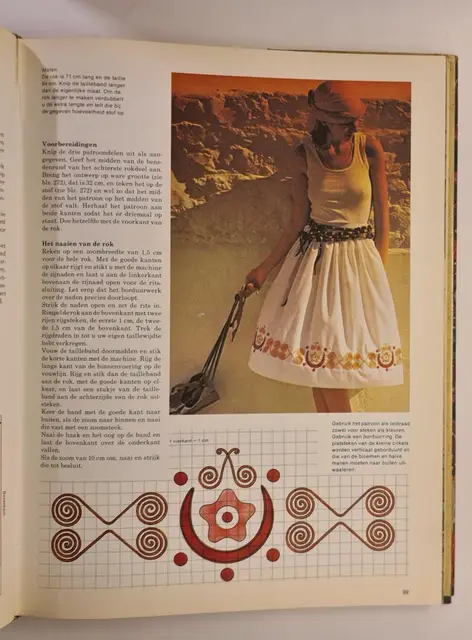
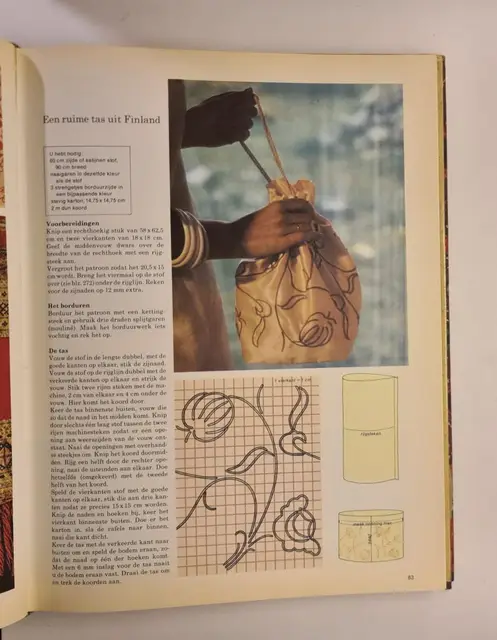
Sometimes, a technique is found in a single region — such as the use of porcupine quills by the North American Indians or the colourful keera appliqué on the molas from Central America. Some motifs appear to have a universal meaning. The tree of life, the globe and the eight-pointed star are widely used symbols in various parts of the world. Religions and cultural traditions have influenced embroidery. Symbolism was particularly important in China, where embroidered birds indicated rank and status and where countless abstract and stylised mottos were applied to clothing. Colour also plays a prominent role. In India, for example, red is associated with contentment and is therefore prominently featured in wedding gifts. In traditional embroidery, alongside conventional fabrics, a wide variety of surfaces and objects are used to achieve a three-dimensional effect: in Africa, raffia and porcelain snail shells are used for this purpose; in North America, fish skin and suede; and in India, beetle wings. This book offers a wealth of practical information. Stitches are described and illustrated. Using 35 patterns, derived from the illustrations in this book, it demonstrates how traditional designs can be incorporated into modern tapestries, samplers, clothing or simple accessories. The patterns are suitable for beginners, whilst the advanced embroiderer can draw inspiration from them. The many designs can be worked in various ways; the drawings can be used for needle lace or techniques on countable fabric. The photographs and patterns can be enlarged to any desired scale.
Throughout the centuries, people have drawn inspiration and expressed their artistic abilities by creating and decorating their own cloths, tapestries and so on using a wide variety of techniques. The motifs used reflect a close connection to a particular culture. The decorations reflect customs and traditions. This book opens up this fascinating world to the modern lover of needlework. It presents a fascinating overview of techniques, designs and materials used in folk crafts from, amongst others, North and South America, Scandinavia, Eastern and Western Europe, the Soviet Union, Africa, India, China, and West, East and South-East Asia. Mary Gostelow covers both characteristic regional designs, styles and techniques, as well as the traditional and universal use of fabrics, materials and colour schemes. Whilst, for example, the tree of life motif appears in all manner of variations across the globe, other motifs are strongly regionally specific. In thirteen chapters, organised on an ethnological basis, the author provides step-by-step instructions for creating traditional designs, along with suggestions for attractive decorations and accessories. Beginners will find the basic techniques in *The Big Folklore Embroidery Book*, whilst more advanced embroiderers will find inspiration to create their own unique designs.