
Spirit is a Bone
Adam Broomberg / Oliver Chanarin
€ 29.95
In stock (only 1 copy left). Shipping € 4.55 (in the Netherlands; for other rates see Terms and shipping).
Sadly, this book has been sold.
- Author
- Adam Broomberg / Oliver Chanarin
- Publisher
- mack
- ISBN
- 9781910164181
- Language
- English
- Condition notes
- 2015, 240pp, hardback, as new
- Category
- Hobby › Photo album
About this book
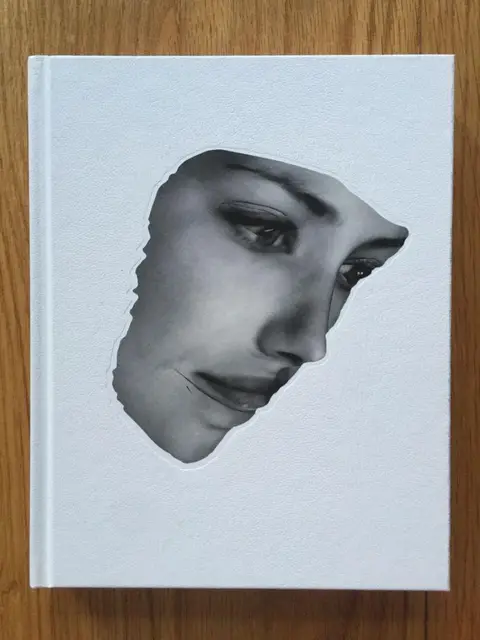
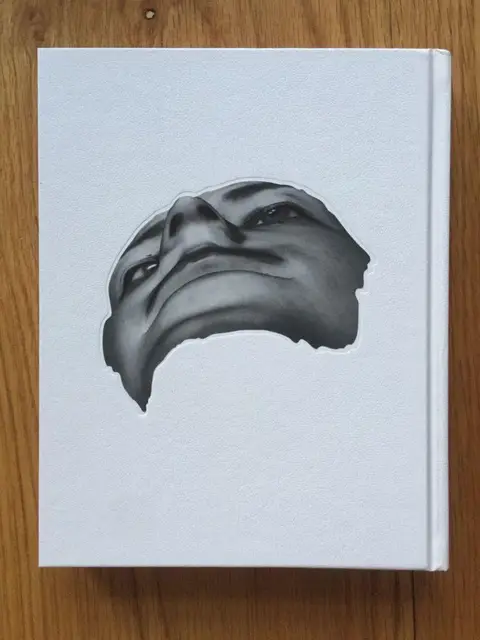
The series of portraits in this book, including those of Pussy Riot member Yekaterina Samutsevich and many other Moscow residents, was created by a machine: a facial recognition system recently developed in Moscow for public safety and border control. The result resembles a digital life mask more than a photograph; a three-dimensional image of the face that you can easily rotate and examine up close. What makes this camera special is that it is designed to take portraits without the person’s cooperation; four lenses work together to generate a full frontal image of the face, making it appear as though the person is looking straight into the camera, even if they are unaware that a photograph is being taken. The system is designed for facial recognition in busy areas such as underground stations, railway stations, stadiums, concert halls or other public spaces, but also to photograph people who would normally object to being photographed. Anyone who comes into contact with this type of camera is indeed rendered passive, for whichever way they look, their face is always depicted as looking straight ahead, stripped of shadows, make-up, disguises or even posture. By using this device, Broomberg & Chanarin have established their own taxonomy of portraits in contemporary Russia. Following in the footsteps of August Sander’s pioneering work, *Citizens of the Twentieth Century*, Broomberg & Chanarin have created a series of portraits, categorised by profession. But their portraits are produced using this new technology, with little to no human interaction. They are low-resolution and fragmented. The success of these images is determined by how accurately the machine can identify its subject: the features of the nose, the eyes, the chin, and how these three intersect. Yet they are inevitably portraits of individuals who struggle, and often fail, to enter into a social contract with the state. This book is the result of a series of encounters, interactions and conversations between Broomberg & Chanarin and the photographic collections of the Library of Birmingham, made possible by a commission from GRAIN and the library, with support from the Arts Council of England.